
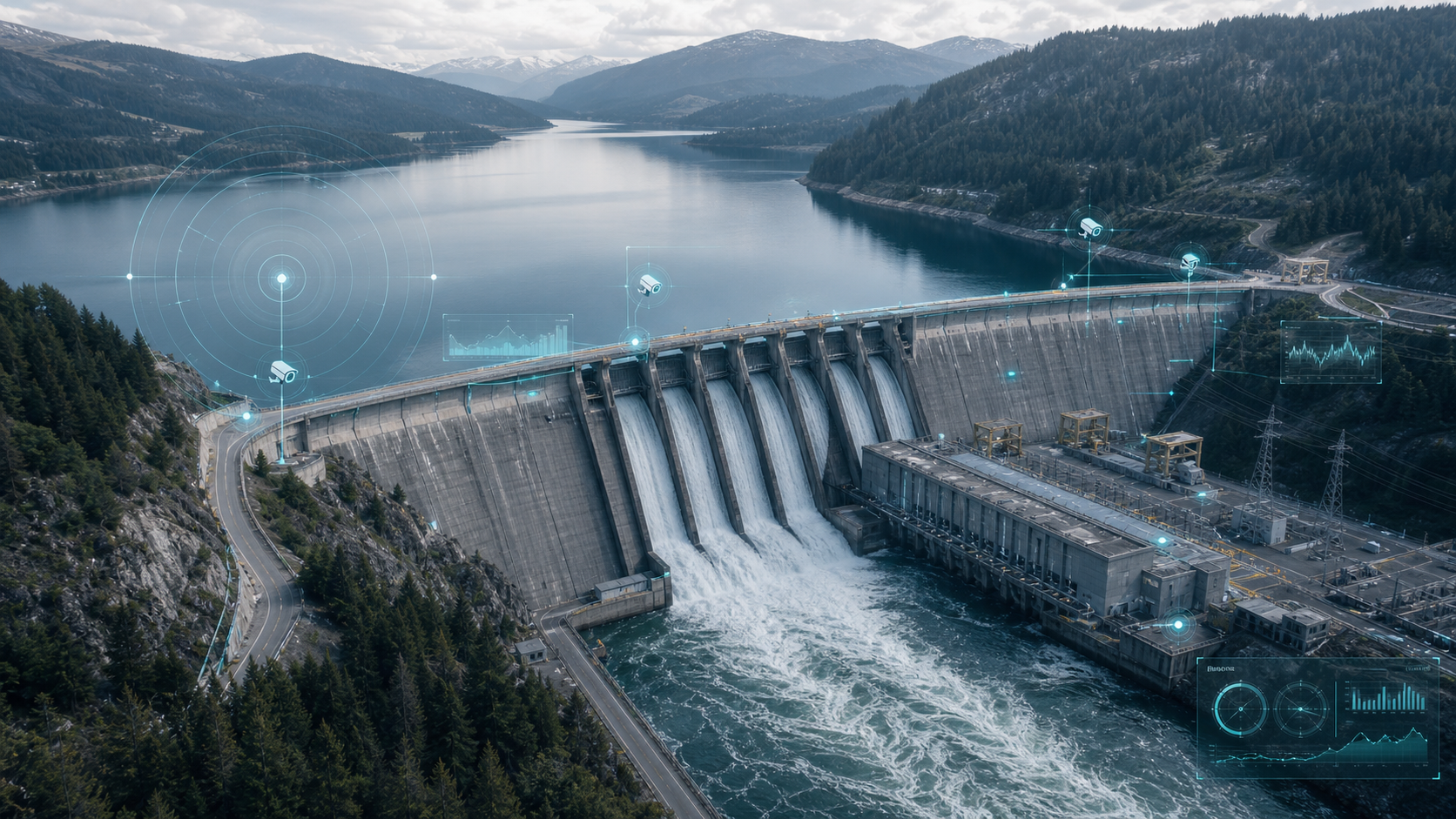
Comprehensive Security Surveillance for Hydroelectric Dams: CCTV, Radar, and Centralized Monitoring
Hydroelectric dams are among the most critical pieces of national infrastructure. They generate electricity, regulate water supply, and protect downstream communities. Yet their vast perimeters, remote locations, and the catastrophic consequences of any breach make dam security a uniquely demanding challenge. A single undetected intrusion, unauthorized vessel on the reservoir, or tampering with intake structures can compromise both power generation and public safety.
Traditional security approaches—periodic patrol rounds, standalone CCTV feeds, and basic fencing—are no longer sufficient. Modern dam operators need integrated, AI-driven surveillance that combines video analytics, radar detection, and perimeter monitoring into a single operational view. This article explores how these technologies work together to provide comprehensive security for hydroelectric facilities.
How a Hydroelectric Dam Functions
Understanding dam security requires understanding the facility itself. A hydroelectric dam consists of several interconnected systems:
- Reservoir: The upstream body of water stored behind the dam, often spanning many square kilometers. Security risks include unauthorized watercraft, people accessing restricted banks, and environmental threats.
- Intake structures: Points where water is drawn from the reservoir into the penstock system. These are typically controlled by gates or screens and are high-security zones.
- Penstock: Large pipes or tunnels that carry water under pressure from the intake to the turbine. Physical damage or tampering with penstock access points can cause catastrophic failures.
- Turbine and generator: The core power generation equipment housed in the powerhouse. While typically indoors, the surrounding exterior areas and access roads require surveillance.
- Spillway: The controlled release channel for excess water. Unmonitored spillways can mask unauthorized activity or indicate tampering.
- Downstream areas: The river or channel below the dam, which must be monitored for safety and compliance.
Each of these zones presents distinct security requirements. A one-size-fits-all camera deployment will leave critical gaps.
Security Challenges at Dams
Dams present several challenges that make them difficult to secure:
- Vast perimeter: A large dam complex can have a perimeter stretching 10 to 50 kilometers along reservoir banks, access roads, and downstream boundaries. Manual patrol coverage is impractical.
- Remote locations: Many dams are situated in hilly or mountainous terrain with limited road access. Response times for security teams can be measured in hours, not minutes.
- Critical infrastructure risk: A security breach at a dam is not the same as a breach at a commercial facility. Consequences can include loss of power generation, downstream flooding, environmental damage, and loss of life.
- Multiple threat vectors: Threats range from trespassing and vandalism to sabotage, unauthorized drone operations, and vessel-based approaches on the reservoir.
- Regulatory obligations: Government regulations and dam safety authorities often mandate specific security standards, surveillance coverage, and incident documentation.
These challenges demand a layered, technology-driven security architecture rather than a reliance on physical barriers alone.
CCTV Surveillance Use Cases for Dams
AI-powered CCTV provides the visual backbone of dam security. Key deployment areas include:
- Spillway monitoring: Cameras with wide-angle coverage track water flow patterns, detect debris, and identify unauthorized access to spillway control structures. Video analytics can flag anomalous activity such as people near gated areas or unusual water level changes correlated with visual evidence.
- Intake structure monitoring: High-resolution cameras positioned at intake gates and screens detect tampering, unauthorized access, and structural anomalies. Analytics can distinguish between routine maintenance activity and genuine security events.
- Penstock and tunnel access points: Cameras at penstock inspection portals and tunnel entrances ensure that only authorized personnel access these critical zones. Trip wire detection and intruder detection analytics provide immediate alerts when boundaries are crossed.
- Powerhouse exterior and switchyard: The powerhouse perimeter and electrical switchyard require continuous surveillance. Loitering detection and scene change analytics identify unusual behavior or environmental hazards such as smoke or fire.
- Access roads and gates: ANPR-equipped cameras at entry points log every vehicle, while facial recognition or uniform-based classification can verify authorized personnel. Wrong parking detection helps maintain clear emergency access routes.
- Visitor and public areas: Where dams are open to tourism or public access, crowd detection and occupancy monitoring ensure safe capacity levels while maintaining security awareness.
- Downstream monitoring: Cameras along downstream riverbanks detect flooding, debris flow, and unauthorized human activity in restricted zones.
Radar for Large-Area Coverage
CCTV cameras have inherent limitations in range and environmental conditions. Radar fills the gap for wide-area detection:
- Reservoir bank monitoring: Radar systems can detect human movement along reservoir banks at distances of several kilometers, even in darkness, fog, or heavy rain. This is especially valuable for dams with extensive upstream perimeters that cannot be economically covered by cameras alone.
- Perimeter breach detection: Radar sensors integrated with the perimeter fence system can detect cutting, climbing, or tunneling attempts. Unlike camera-only solutions, radar provides detection regardless of lighting or weather conditions.
- Vessel and boat detection on reservoir: Unauthorized watercraft approaching a dam represent a significant security threat. Radar automatically detects and tracks vessels on the reservoir surface, triggering alerts when they enter restricted zones or approach the dam face.
- Drone detection: Modern radar systems can detect unauthorized drone operations above the dam complex, a growing concern for critical infrastructure.
Radar and camera systems work best when fused. A radar detection triggers a camera to slew to the target, providing visual confirmation. This sensor fusion approach reduces false alarms while maintaining comprehensive coverage.
Perimeter Fencing with Intrusion Detection
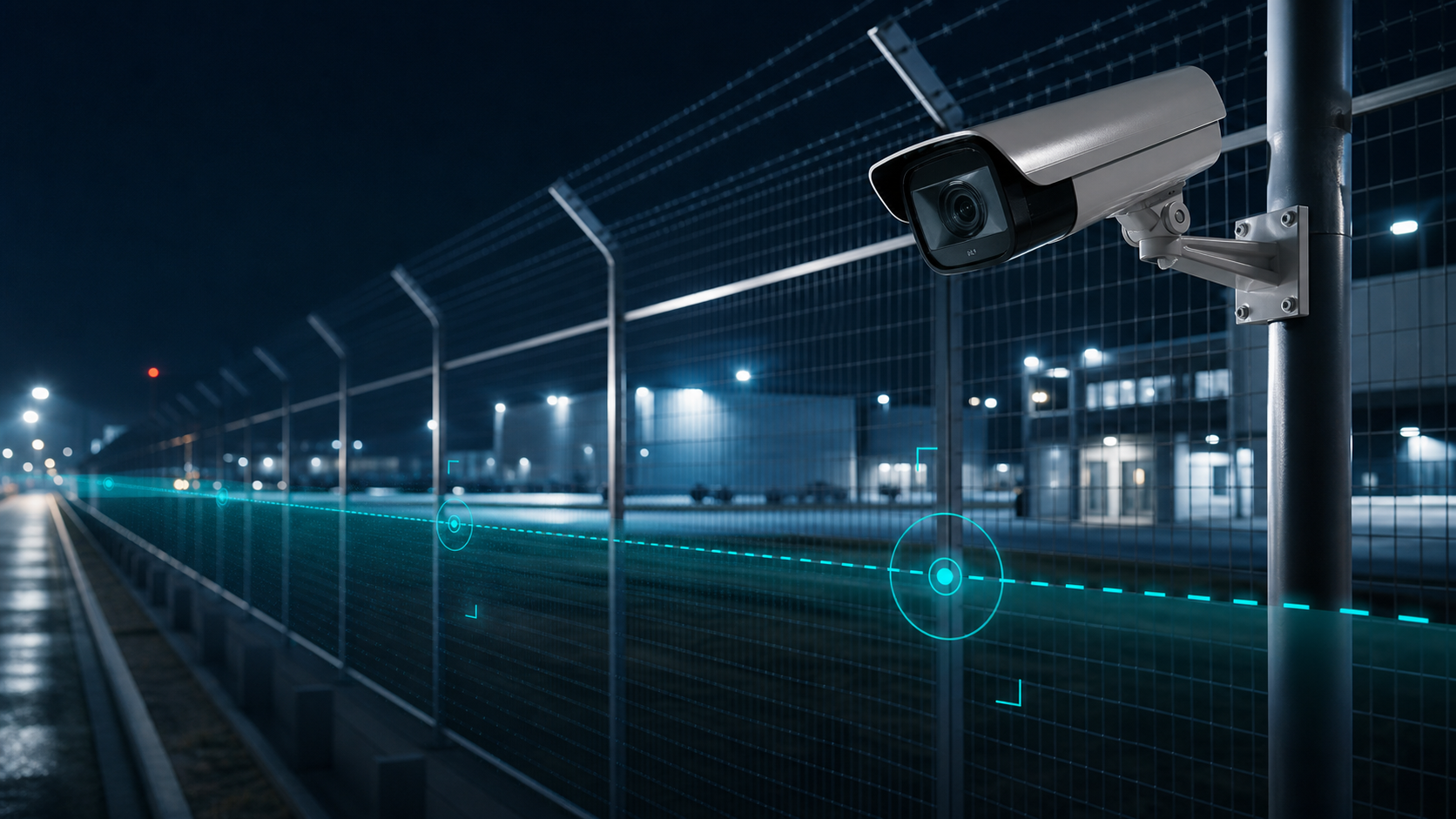
Physical perimeter fencing remains the first line of defense, but modern approaches integrate detection directly into the fence:
- Fence-mounted sensors: Vibration sensors, fiber-optic detection cables, or microphonic sensors detect cutting, climbing, or lifting of the fence fabric. These provide precise location data along the perimeter.
- Integration with CCTV analytics: When a fence sensor triggers, the nearest camera automatically focuses on the breach point. AI-powered intruder detection provides visual verification within seconds, allowing security teams to distinguish between genuine threats and false alarms caused by animals or weather.
- Perimeter bridge and walkway monitoring: Many dams have perimeter bridges or elevated walkways that serve as both access routes and security patrol paths. Cameras with trip wire detection along these structures ensure no unauthorized crossing.
- Zoned alert management: The perimeter is divided into security zones with priority levels. A breach near the powerhouse triggers a higher-priority response than one on a remote reservoir bank.
Centralized Single-Portal Monitoring
The real operational advantage comes from combining all these data sources into a unified monitoring portal:
- Unified dashboard: A single operational view that presents live CCTV feeds, radar plots, fence alarm statuses, and environmental sensor data. Security operators no longer need to switch between multiple systems.
- Alarm management and prioritization: AI-driven analytics feed into an intelligent alarm management system. Events are classified by severity, location, and threat type. A confirmed intruder near the powerhouse escalates immediately; a radar detection of a deer on a reservoir bank generates a lower-priority notification.
- Incident logging and evidence: Every alert, camera recording, and operator action is logged with timestamps and geolocation. This creates an auditable record for compliance reporting and incident investigation.
- SCADA integration: For hydroelectric plants, the monitoring portal can integrate with existing SCADA (Supervisory Control and Data Acquisition) systems. This allows security events to be correlated with operational data—such as water levels, turbine status, or gate positions—providing operators with complete situational awareness.
- Remote access: Authorized managers and security leads can access the monitoring portal from any location, enabling oversight even for dams with limited on-site staffing.
AI-Powered Analytics for Dam Security
Artificial intelligence transforms raw camera and sensor data into actionable intelligence:
- Object detection: Automatically identifies people, vehicles, vessels, and drones in camera feeds, even at long distances or in challenging lighting.
- Loitering detection: Flags individuals who remain in restricted areas beyond expected timeframes, indicating potential surveillance or pre-attack reconnaissance.
- Boundary breach alerts: Virtual trip lines and geofences trigger immediate notifications when someone crosses into a restricted zone, whether by foot, vehicle, or watercraft.
- Flood zone monitoring: Analytics can detect rising water levels, debris accumulation, and unusual flow patterns that may indicate structural issues or impending flood conditions.
- Fire and smoke detection: Early detection of fire in powerhouse areas, vegetation fires on dam slopes, or smoke from unauthorized burning near critical infrastructure.
- Camera health monitoring: Continuous assessment of camera image quality, orientation, and uptime ensures that surveillance coverage gaps are identified and addressed before they become security vulnerabilities.
Implementation Considerations
Deploying comprehensive security at a dam requires careful planning:
- Phased deployment: Start with the highest-risk zones—powerhouse perimeter, intake structures, and main access points—then expand to cover the full reservoir perimeter.
- Redundancy: Critical cameras and sensors should have backup power and communication paths. A single point of failure in the surveillance system creates a security gap.
- Network infrastructure: Dams often lack reliable network connectivity. Dedicated fiber runs, microwave links, or cellular failover ensure that surveillance data reaches the central monitoring portal without interruption.
- Environmental resilience: Equipment must withstand extreme weather, humidity, vibration from turbine operations, and potential flooding. Industrial-rated cameras and enclosures are essential.
- Staff training: Technology is only effective when operators understand how to use it. Regular training on the monitoring portal, alarm response procedures, and incident documentation ensures the system delivers its full value.
Compliance and Regulatory Considerations
Hydroelectric dams are classified as critical infrastructure in most jurisdictions. Security surveillance systems must often comply with:
- Dam safety regulations: National and regional dam safety authorities may mandate minimum surveillance coverage, recording retention periods, and incident reporting procedures.
- Critical infrastructure protection standards: Frameworks such as NIST, IEC 62443, or national equivalents define security requirements for facilities like dams.
- Data privacy regulations: Camera deployments near public areas must comply with applicable privacy laws. Analytics can help by processing data at the edge and only transmitting alerts rather than continuous video streams.
- Audit and documentation: Regulators may require evidence of continuous surveillance, incident response times, and system maintenance records. A centralized monitoring portal with comprehensive logging simplifies compliance reporting.
Conclusion
Securing a hydroelectric dam requires more than cameras and fences. It demands an integrated approach that combines AI-powered CCTV surveillance, wide-area radar detection, smart perimeter monitoring, and centralized operational management into a single, cohesive system.
For dam operators and hydropower plant managers evaluating security upgrades, the key considerations are: comprehensive coverage across all critical zones, intelligent analytics that reduce false alarms while catching genuine threats, seamless integration with existing SCADA and operational systems, and a unified portal that gives security teams complete situational awareness.
Pixuate's Perimeter and Security Analytics platform—including intruder detection, trip wire detection, loitering detection, and camera health monitoring—combined with a centralized Nucleus Dashboard, provides the foundation for this kind of integrated dam security architecture. Whether deployed as a new system or integrated with existing CCTV infrastructure, the goal is the same: turn surveillance data into actionable security intelligence.
If you are evaluating security surveillance for a dam or hydropower facility, contact Pixuate to discuss how AI-powered video analytics and centralized monitoring can address your specific operational requirements.
About the author
Admin User
Pixuate — AI-powered video analytics for smarter, safer operations.
Related Articles


Comments (0)
Please login to leave a comment.