
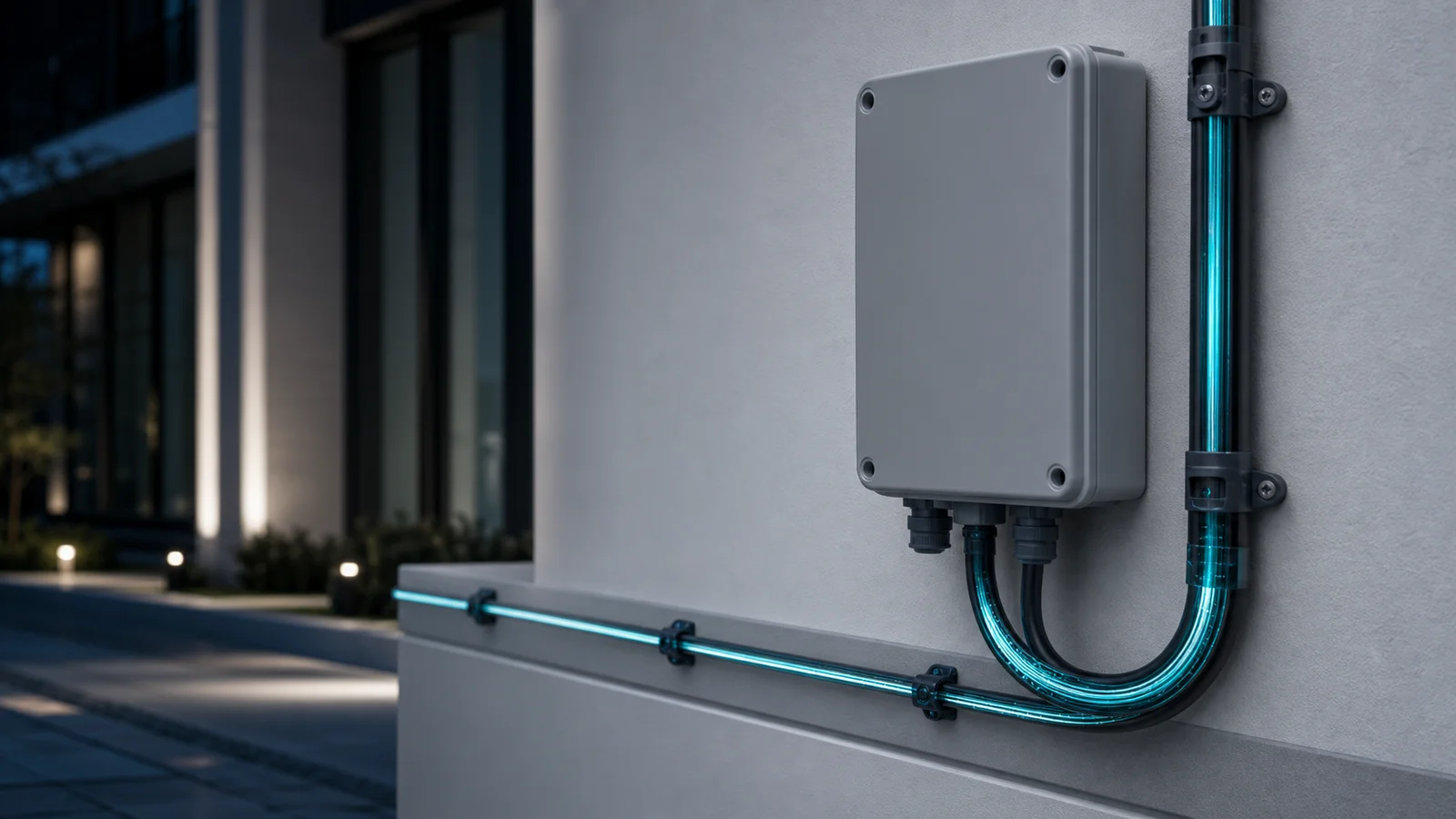
OFC Cable (Optical Fibre Cable)
Long-distance, interference-free connectivity for cameras far from the network core
What is Optical Fibre Cable?
Optical fibre cable (OFC) transmits data as pulses of light through a glass or plastic fibre core rather than as electrical signals through copper wire. Because light is not affected by electromagnetic interference (EMI) and can travel much further without signal loss, fibre is the preferred medium when cameras need to be connected over distances greater than 100 metres — the hard limit of copper CAT6.
In surveillance and analytics deployments, OFC is used for trunk runs: the long cable that carries aggregated video traffic from an outdoor camera cluster or a remote building back to the main network room or server room.
Single-Mode vs Multi-Mode Fibre
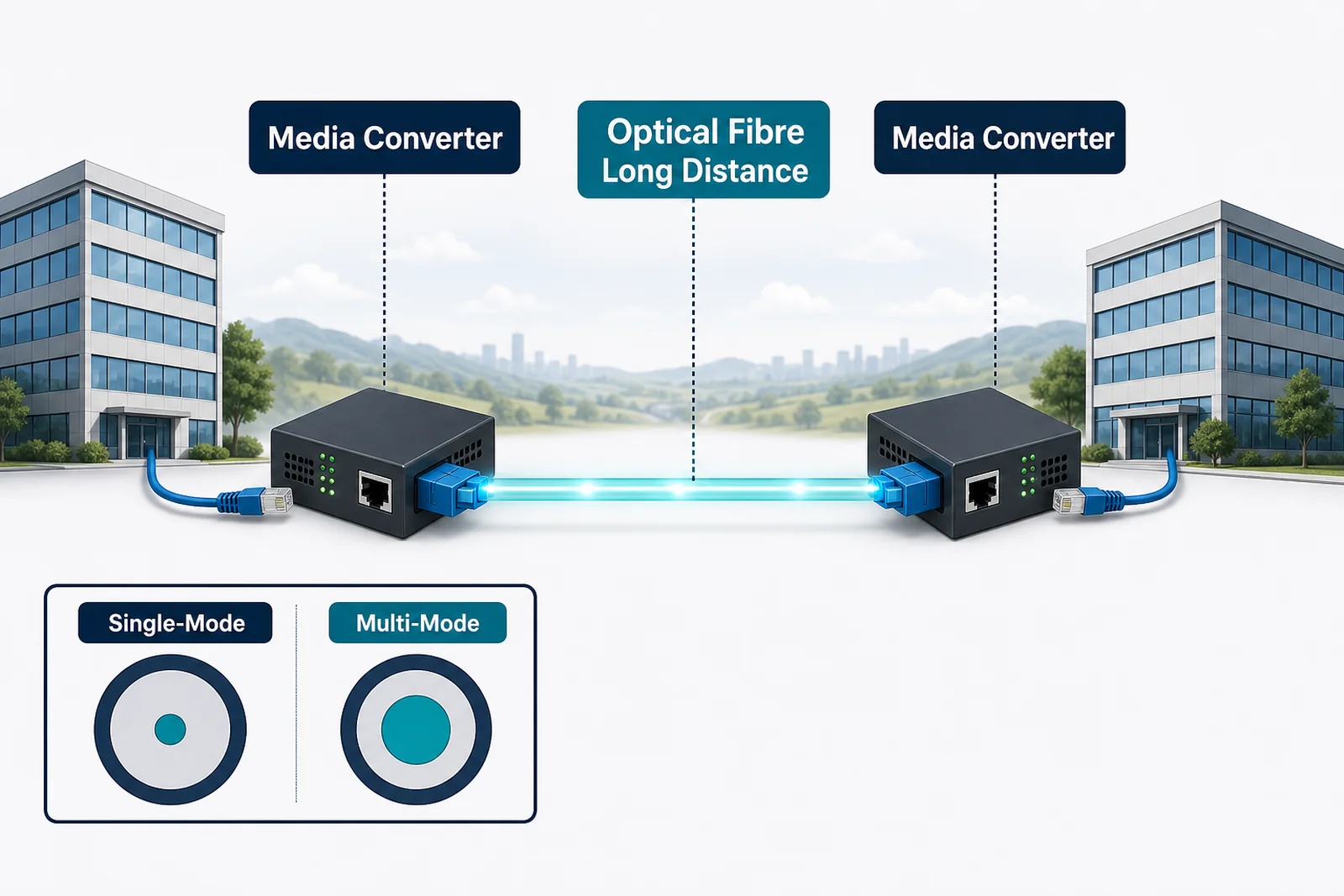
- Multi-mode fibre (MMF): Larger core (50 or 62.5 µm), cheaper transceivers, suitable for distances up to ~550 m (OM3/OM4). Common for campus and building-to-building runs.
- Single-mode fibre (SMF): Smaller core (9 µm), supports distances from 2 km to 80 km+. Used for inter-site connections, highway surveillance, and long-perimeter runs. Higher transceiver cost but lower cable cost per metre at long distances.
For most surveillance site installations (campus perimeter, large parking lots, factory grounds), multi-mode fibre is sufficient. Single-mode is used for highway monitoring, city-wide camera networks, and inter-building runs exceeding 500 m.
Fibre vs CAT6 Copper: When to Use Each
| CAT6 Copper | OFC (Fibre) | |
|---|---|---|
| Max distance | 100 m | 550 m (MM) to 80 km+ (SM) |
| PoE (camera power) | Yes — power + data on one cable | No — separate power required |
| EMI immunity | Susceptible (use STP for mitigation) | Fully immune |
| Lightning risk | Conducts surges | No electrical conduction — safer outdoors |
| Cost | Lower cable + termination cost | Higher transceiver and termination cost |
| Bandwidth | 1–10 Gbps | 10–100 Gbps+ |
Fibre in a Pixuate Deployment
In large-site Pixuate deployments — highways, industrial campuses, large parking facilities — the typical cabling architecture is:
- Camera to local PoE switch: CAT6 copper (within 100 m). The PoE switch powers and aggregates cameras in a zone.
- Local switch to core switch / server room: Optical fibre trunk (the long run back to the server). A media converter or SFP module at each end converts between electrical and optical signal.
- Core switch to analytics server: CAT6 copper (short run within the server room).
This hybrid architecture gives you the power delivery of copper at the camera end and the distance and interference immunity of fibre for the long trunk runs.
Cameras on fibre runs still need local power — either from a local PoE switch connected via fibre, or a separate power supply with a media converter at the camera.
Large-Site Deployment Planning
Pixuate's team can design a cabling architecture for your site — combining copper, fibre, and wireless where appropriate.