
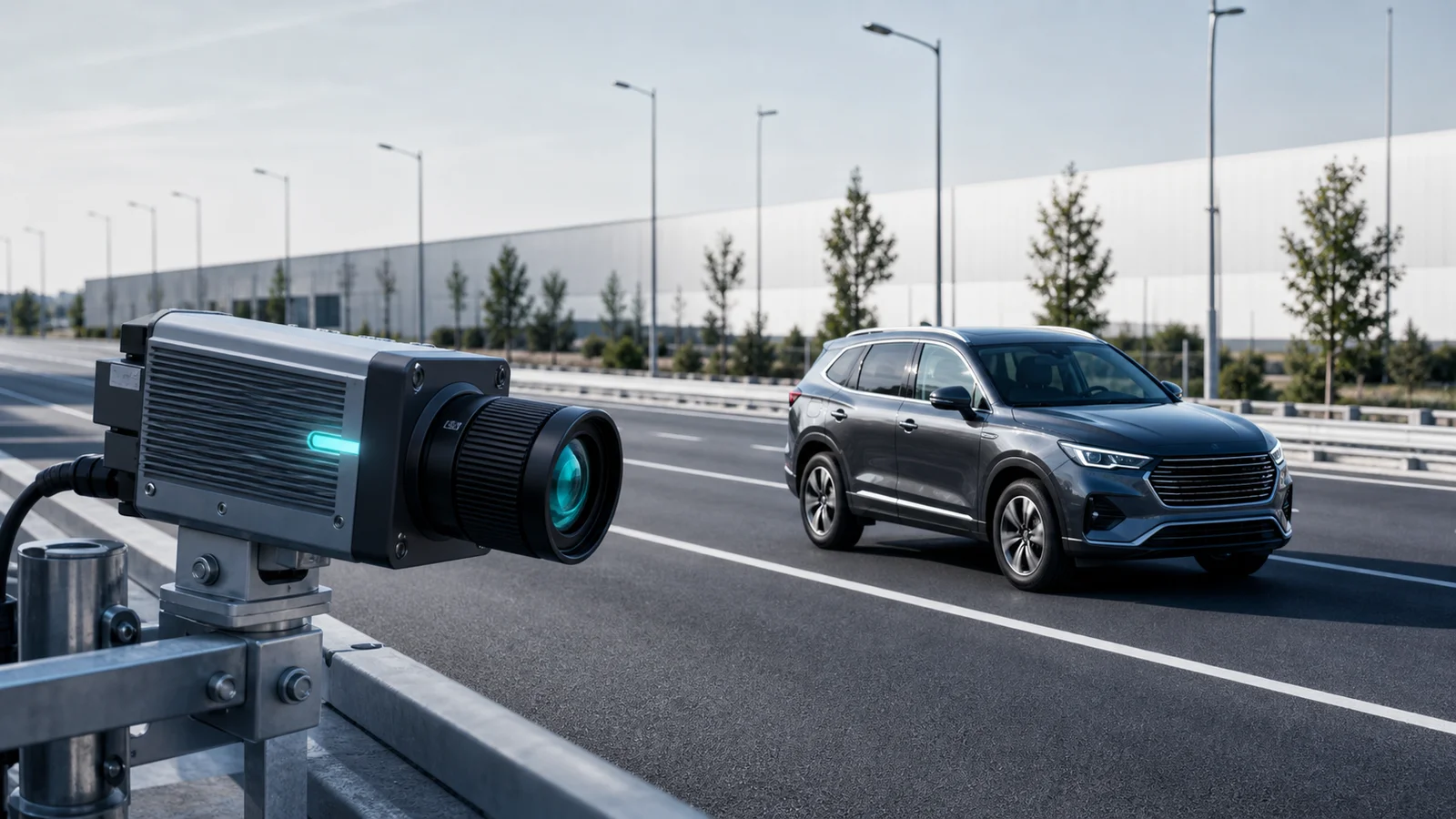
Global Shutter Camera
Why shutter type matters for vehicle detection, ANPR, and high-speed analytics
Rolling Shutter vs Global Shutter
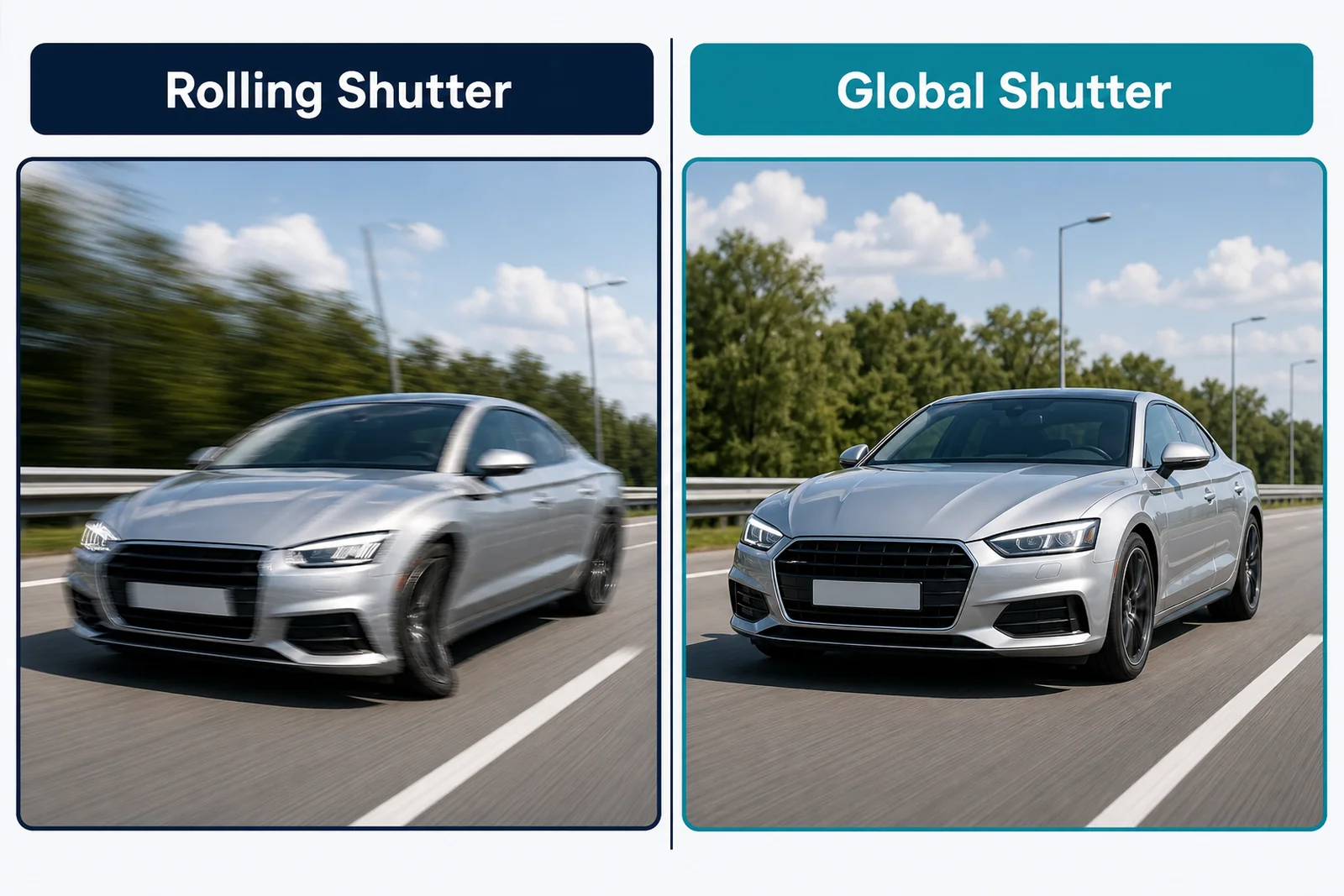
All digital cameras capture a scene using an image sensor divided into rows of pixels. The difference between shutter types is when those rows are exposed to light.
Rolling shutter exposes the sensor row by row, from top to bottom. This takes a small amount of time — typically a few milliseconds. For slow-moving subjects, this is invisible. But for fast-moving objects (vehicles, rotating machinery), different parts of the image are captured at slightly different moments. The result is distortion: a car moving at 60 km/h will appear skewed or slanted in the frame, and text on a licence plate can become illegible.
Global shutter exposes every pixel on the sensor at exactly the same instant. The entire frame is captured in a single snapshot with no time offset between rows. Fast-moving objects appear sharp, undistorted, and readable — exactly as they appear in reality.
Why Global Shutter Cameras Matter for AI Analytics
AI analytics algorithms — especially those that read text, match shapes, or detect specific objects — rely on clean, undistorted images. Rolling shutter distortion introduces artefacts that reduce AI accuracy significantly in high-speed scenarios.
- ANPR (Automatic Number Plate Recognition): Licence plate characters that are skewed or blurred by rolling shutter cannot be read reliably. Global shutter is essential for vehicles moving above ~30 km/h.
- Vehicle classification: Accurate vehicle type and model classification requires undistorted body shape. Rolling shutter artefacts can cause misclassification.
- Red light and speed violation detection: Legal-grade evidence requires a clear, timestamped, undistorted image of the violation event.
- Industrial inspection: Machinery moving on a conveyor or rotating components require global shutter for accurate defect detection.
When Do You Need a Global Shutter Camera?
Use global shutter cameras when:
- Vehicles are passing through the camera's field of view at more than 20–30 km/h
- Licence plate reading is required (ANPR)
- Fast-moving objects need to be classified or counted accurately
- Violation evidence images must be legally defensible
- Industrial machinery or conveyor belt inspection is involved
Rolling shutter cameras are acceptable for:
- People counting and footfall analytics (pedestrians move slowly)
- Retail customer behaviour analysis
- Stationary perimeter monitoring where subjects are not moving fast
- Worker safety monitoring in areas with slow movement
Shutter Speed and Exposure
Global shutter cameras typically require a higher shutter speed to freeze motion cleanly. In low-light conditions, this means the sensor receives less light per frame. To compensate:
- Use cameras with larger image sensors (1/1.8" or larger) for better low-light sensitivity
- Install supplemental IR or white-light illuminators for night operation
- Choose cameras with wide aperture lenses (f/1.4 or f/1.6) to maximise light intake
Pixuate's ANPR and traffic products include camera specification sheets that detail shutter speed, illuminator distance, and lane geometry requirements for each deployment scenario.
Deploying an ANPR or Traffic Solution?
Get a camera specification sheet tailored to your lane layout, vehicle speed, and lighting conditions.